
The problem & opportunity
Identifying the problem
We formed a plan to conduct moderated interviews with MindTap instructors in order to identify their most painful workflows, with the end-goal being to increase their satisfaction with the platform. I observed, took notes, and drew insights as our research team guided instructors through several exercises intended to understand where Cengage was failing to satisfy their needs.
Opportunity to improve MindTap's activity settings
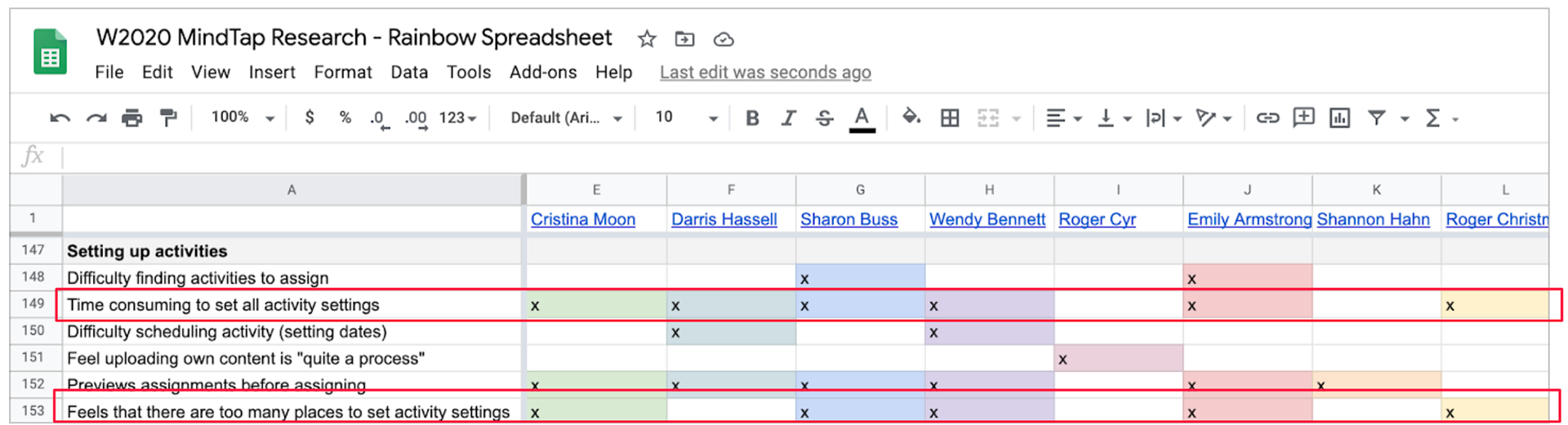
Instructors consistently stated they were having a bad experience setting up their course due to the amount of time and effort it was taking them to adjust activity settings. Many instructors explicitly stated that changing activity settings was the most difficult part of using MindTap.
Leveraging team knowledge
Potential solutions
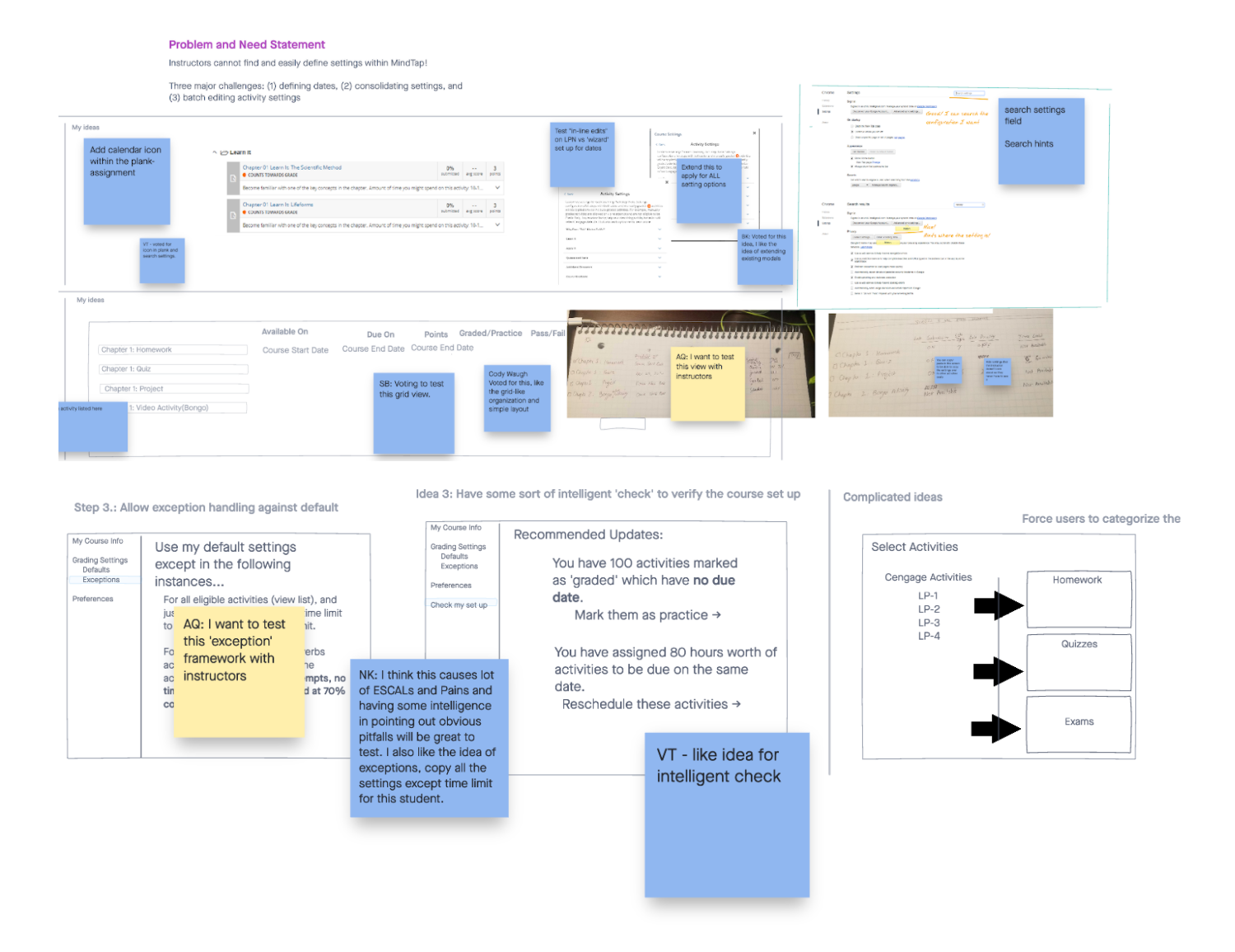
Because activity settings within MindTap are complex, I conducted a design workshop with our stakeholders and engineers. In this workshop, everyone sketched out potential design solutions together.
It was really valuable to have team members such as systems analysts, developers, architects, product managers, and UX, all working together ideating potential solutions. This allowed for a broadened perspective on design solutions, as well as evaluated engineering feasibility early on in the process. Because of the quick turnaround time, this helped us reduce the risk and cost of failure.
Aligned team perspective
After the team sketched out ideas, we voted on some of the solutions we thought would help solve the problem.
This facilitated team alignment as it involved members from every department of the product team helping to choose direction. We avoided wasting time debating potential solutions. It provided us with a quick way of choosing an agreed-upon direction to focus on.
Wireframing solutions
Activity settings where & when users need them
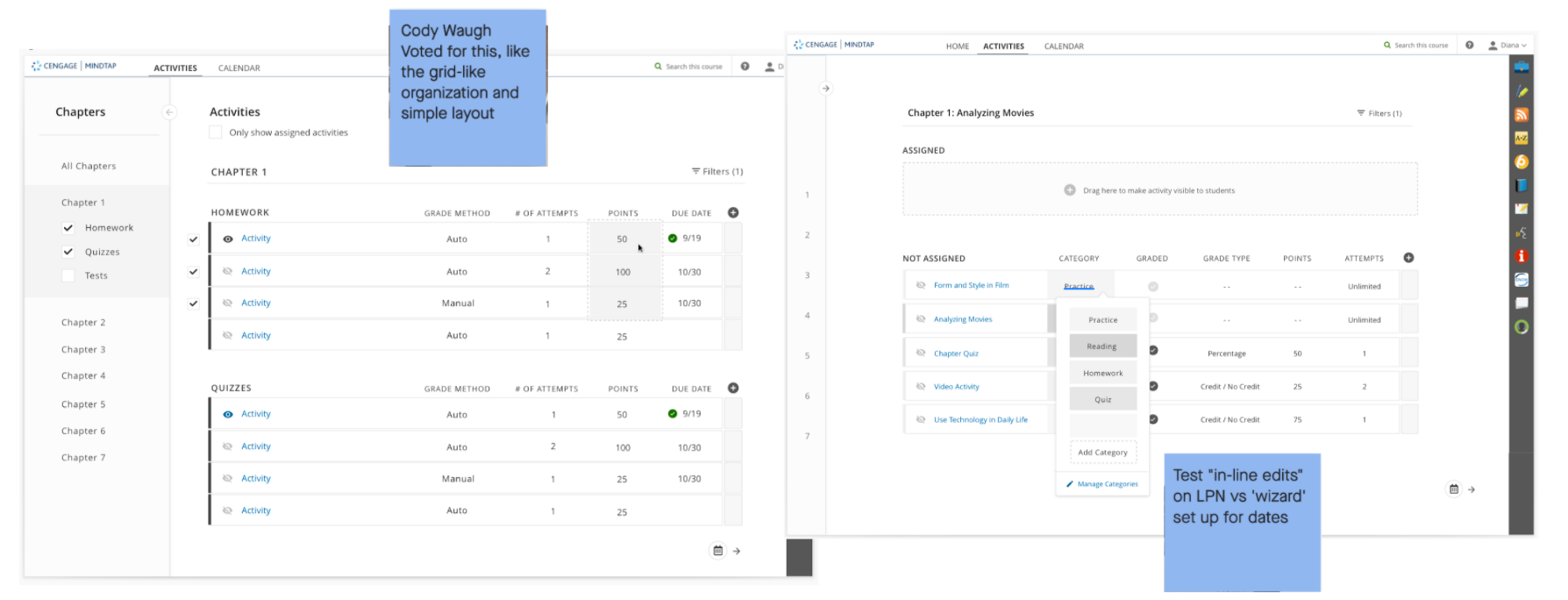
I took the solutions voted on by the team and began making sense of them. Instructors were complaining about the amount of time and effort it took them to set activity settings. During the initial instructor interviews, I observed instructors attempting to change the activity due date, due time, attempts allowed, points, etc. and getting frustrated upon not being able to locate the settings menu that held the specific setting they were looking for. It also required them to navigate away from the view displaying the activities they had selected, increasing their cognitive load by not allowing them to quickly glance at their selections.
I designed a solution that solved both of those problems. My proposed design provided our users with the option to change activity settings at the point at which they need to, while also keeping their workflow uninterrupted by keeping them right on the Learning Path (the screen listing their activities).
User-centric outcomes!
Reduced risk of pivoting
As it often happens, product strategy decided to shift focus to another project and our team was told we had significantly less time to develop this solution than we had originally expected. The quick turnaround time on these designs made it easy for us to discard solutions. It allowed us to very quickly pivot to a similar, alternate solution.
Activity settings with reduced time & effort
We designed a solution that called for much smaller scope, while continuing to incorporate the ideas voted on by the team. The new design kept much of the same layout MindTap already had, but kept the interaction improvements initially proposed during the redesign. It continued to incorporate the ability to change activity settings in one location, while also keeping users on the Learning Path.
This final solution proved to be sufficient. We conducted instructor interviews again in order to compare the new design to the previous experience. The new approach significantly reduced instructor time on task, as well as improved task completion rate. Users went from an average of 30 minutes, oftentimes unsuccessfully, completing 8 tasks, to an average of 8 minutes, successfully, completing 8 tasks.
Satisfied users equaled increased Net Promoter Scores
Our average Net Promoter Score increased back to its pre-Covid average of about 8.5, making this project a success.